Why 'Sales' is a Dirty Word in Open Source (And How We Fix It)
Discover why 'sales' has a bad reputation in open source and how COSS companies can evolve their outreach to fix it.
I'll just come right out and say it: I am not ashamed that my platform helps Commercial Open Source Software (COSS) companies sell.
In the open-source space, "sales" is often treated as a dirty word. Developers cringe at it. Community managers try to soften it. But the truth is, the stigma isn't about the act of exchanging money for value—it's a direct reaction to the aggressive, broken sales processes that too many COSS organizations deploy when the big revenue chase is on.
When the pressure mounts to hit numbers, companies start looking at EVERYONE as a potential commercial customer. They approach outreach as if every single person they contact desperately needs their solution—whether that prospect knows it or not.
And that leads to a fundamentally broken system.
The Death of "The Cool Call"
Way back in the original MySQL days, people would actually make time to talk to someone from a "cool" open-source company. Part of that was novelty—most people didn't even realize MySQL was a company as well as a product. The conversations were organic, interesting, and mutually beneficial. It was good for everyone.
Then the floodgates opened. The calls kept coming. The emails started flowing. Our inboxes filled up with endless "just checking in" and "bumping this to the top of your inbox" spam.
Today, trying to get an engineering or data leader on the phone is next to impossible. And honestly? I don't blame them.
The "Founder" Target on My Back
Let me tell you about my own inbox. Since I changed my title to "Founder" on LinkedIn, the amount of people trying to sell me things is staggering.
The worst part isn't the volume; it's the sheer laziness. Almost NONE of these reps have taken the time to even glance at my website. They toss out poorly crafted marketing messages. They use obvious, unedited templates. They dial me out of the blue, hoping I'll magically convert on the spot.
On the rare occasion that I actually pick up one of these cold calls, I will always ask (nicely):
"Did you even look at our website? Do you know what we do?"
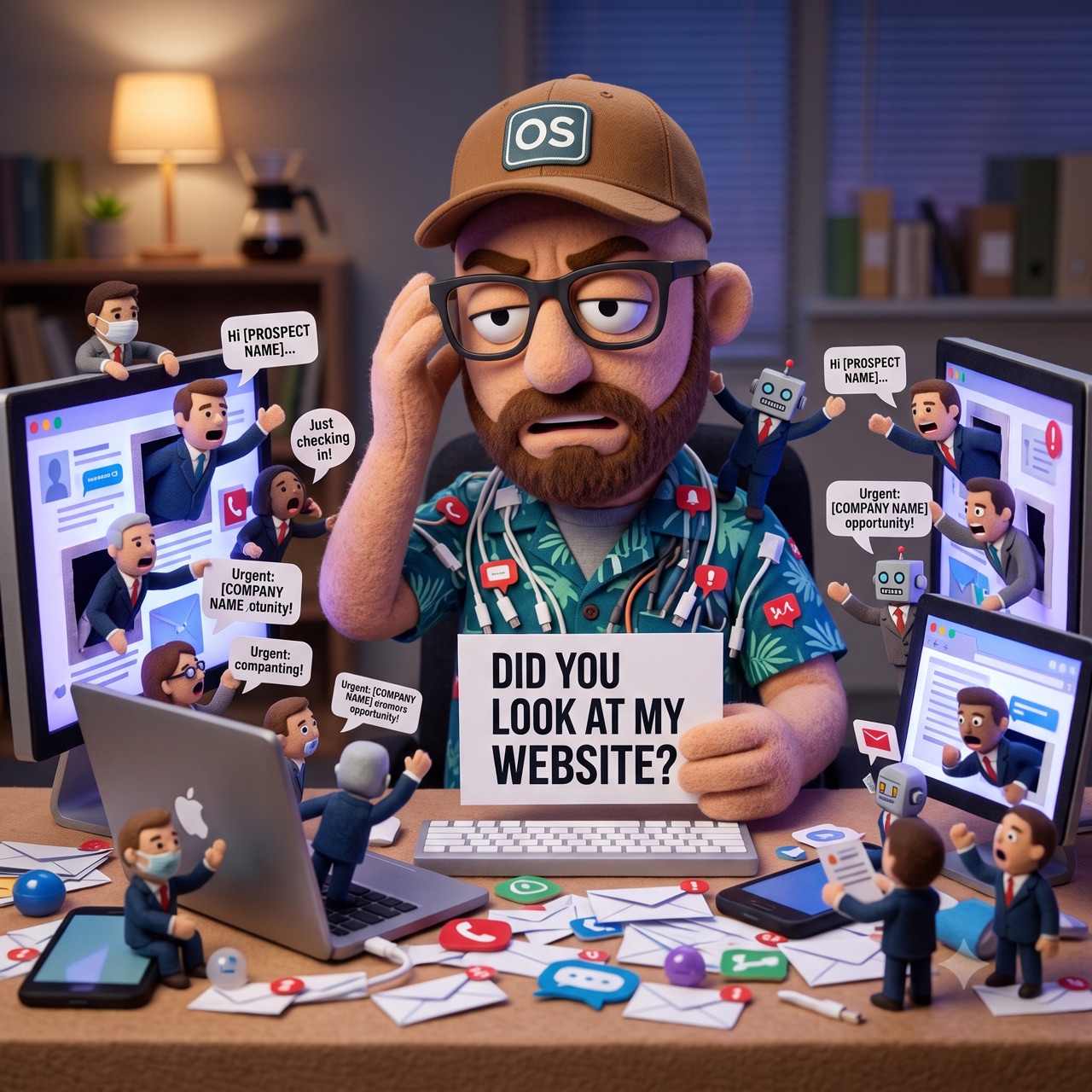
If they haven't done that bare minimum, how on earth can they sell me something I care about? For a completely blind, unresearched cold call to work, it has to land at the exact, immediate moment that I realize something is broken, and that caller just happens to have the exact solution to that specific problem.
The odds of that happening? You're only eligible for that type of cold-call serendipity after you've already won at least two major lottery prizes.
The Reality: COSS Companies Have to Eat
Despite all of this, we have to acknowledge a fundamental truth: COSS companies have payrolls.
They employ brilliant engineers, community managers, and support staff who have mortgages to pay, groceries to buy, and lives to live. That money has to come from somewhere. Open-source software is free to use, but it is incredibly expensive to build and maintain. Revenue is what keeps the lights on and the commits flowing.
Selling is necessary. But the way we sell has to evolve.
Right Person. Right Time. Right Message.
We don't need to stop selling; we need to stop spamming. We need to take the time to learn about an organization, see if there is an actual potential fit, and build a strong, relevant narrative around that reality.
That is exactly why I built my platform. I want to help COSS organizations stop the spray-and-pray madness. I want to help them reach out to the right people, at the right time, with the right message.
When you respect a buyer's context and actually understand their business before you reach out, "sales" stops being a dirty word. It goes back to what it was always supposed to be: solving a problem for someone who actually needs your help.